

If you cook Indian food daily — dal, sabzi, gravies — a cast iron kadai brings something non-stick pans simply cannot: intense, even heat that builds flavour over time. The short answer for most buyers: choose bare pre-seasoned cast iron if you enjoy the seasoning ritual and cook mostly dry or low-acid dishes; choose enamel-coated cast iron if you want lower maintenance or frequently cook tomato-heavy gravies. Below are five models available on Amazon.in that cover both paths, from a solid entry-level option to a lightweight enamel pick with a 15-year warranty.
Affiliate disclosure: As an Amazon Associate I earn from qualifying purchases. This guide contains links to Amazon.in — if you buy through them, ThePicksNest may earn a small commission at no extra cost to you. This does not affect which products are included or how they are described.
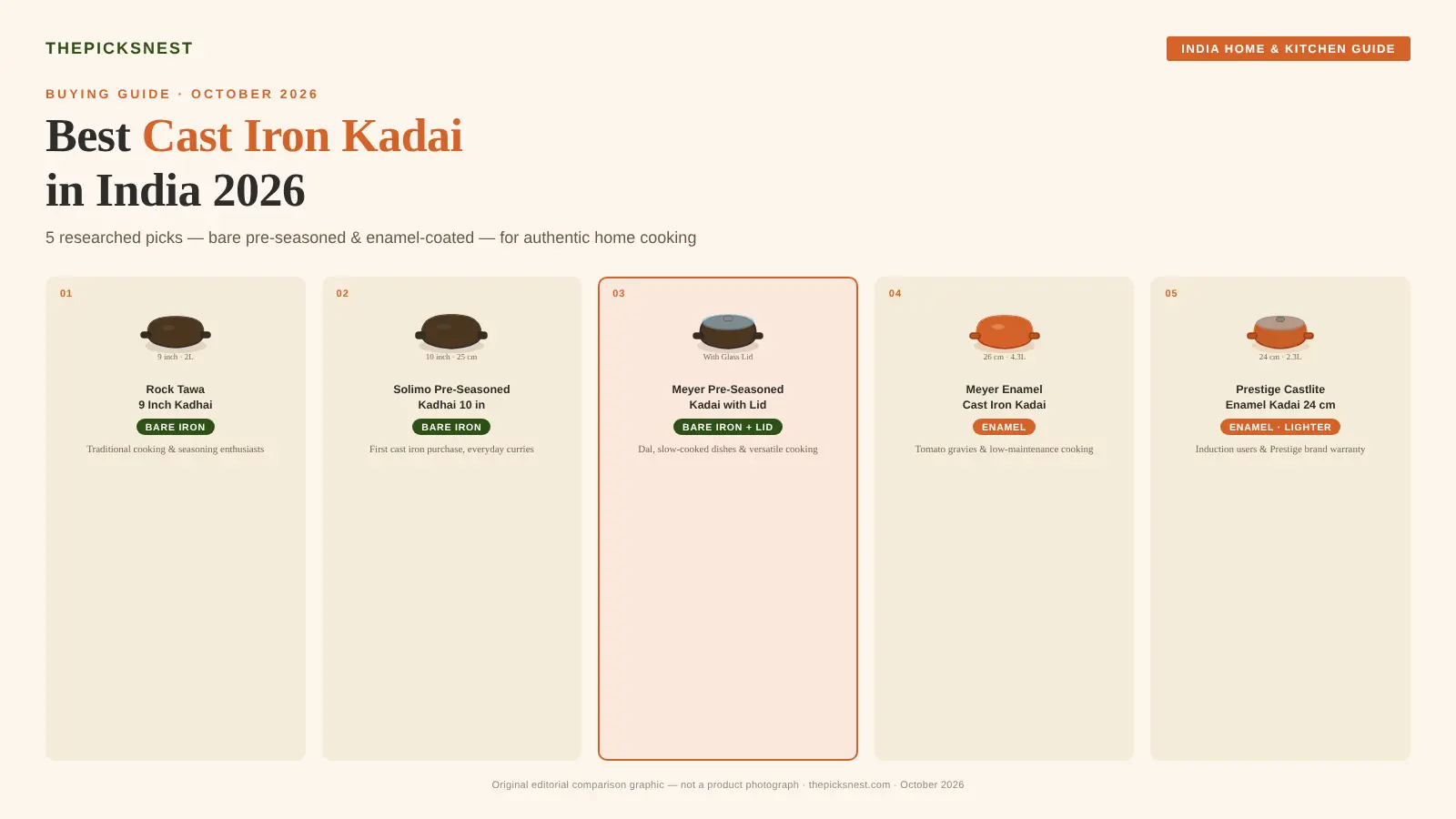
Quick Comparison: 5 Best Cast Iron Kadai in India 2026
| Model | Type | Size | Induction | Best For | Link |
|---|---|---|---|---|---|
| Rock Tawa 9 Inch Kadhai (Pre-Seasoned) | Bare cast iron | 9 in / 2L | Yes | Traditional cooking, seasoning enthusiasts | Check current price |
| Solimo Pre-Seasoned Cast Iron Kadhai 10 in | Bare cast iron | 10 in / 25 cm | Yes | First cast iron purchase, everyday curries | Check current price |
| Meyer Pre-Seasoned Cast Iron Kadai with Lid | Bare cast iron + glass lid | Standard | Yes | Dal, slow-cooked dishes, versatile cooking | Check current price |
| Meyer Enamel Cast Iron Kadai 26 cm | Enamel cast iron | 26 cm / ~4.3L | Yes | Tomato gravies, low-maintenance cooking | Check current price |
| Prestige Castlite Enamel Cast Iron Kadai 24 cm | Enamel cast iron | 24 cm / 2.3L | Yes | Lighter weight, induction users, brand warranty | Check current price |
What to Look For in a Cast Iron Kadai
Before picking a model, it helps to understand the four choices that actually matter for Indian kitchen use.
Bare Cast Iron vs Enamel-Coated
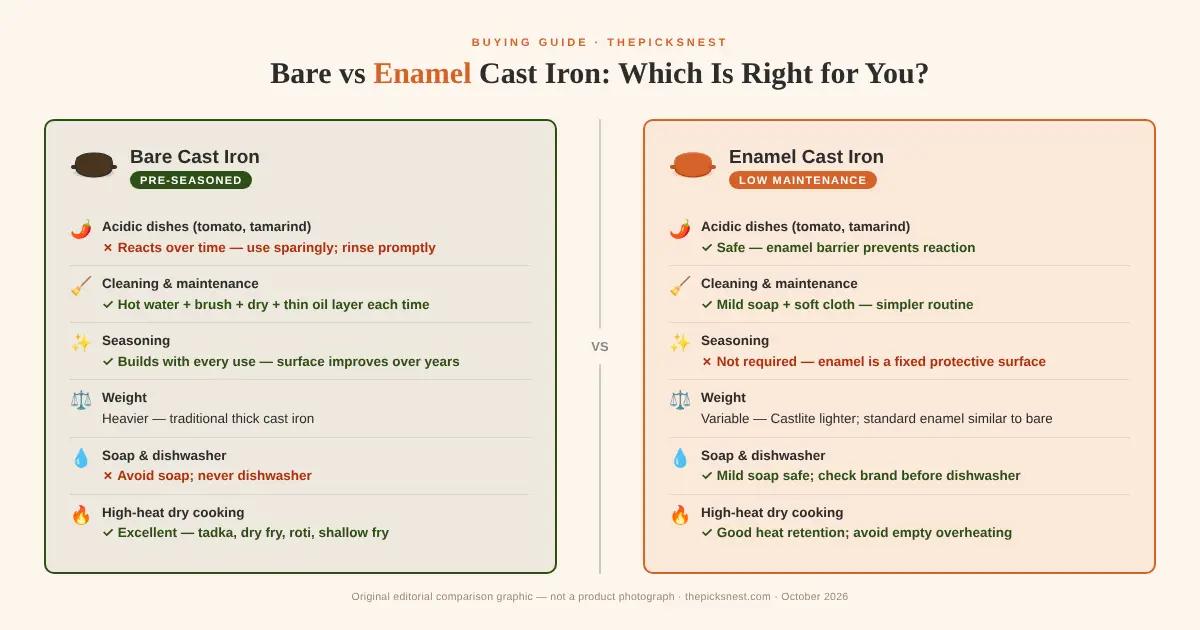
Bare cast iron develops a natural non-stick layer (seasoning) over time. It can handle high heat, works on all hobs including induction and direct flame, and lasts for generations if cared for. The trade-off is that it reacts with acidic ingredients — tomatoes, tamarind, lemon — which can erode seasoning and add a mild metallic note to some dishes. Enamel-coated cast iron has the same heat mass and retention but the enamel layer acts as a barrier, making it safe for acidic gravies and simpler to clean. Enamel chips if knocked hard or shocked with cold water while hot.
Size and Capacity
For a family of 2–3 persons cooking one main dish, a 9–10 inch (23–25 cm) kadai is practical. Larger families or those cooking several dishes at once benefit from 24–26 cm options. Cast iron is heavier than aluminium or steel at the same size — a 10-inch bare cast iron kadai typically weighs 1.8–2.5 kg, so handle design and where you’ll store it both matter.
Induction Compatibility
Most cast iron kadais sold on Amazon.in are induction compatible — the flat base conducts the magnetic field well. Verify the listing mentions induction if that is a requirement, particularly for enamel-coated models where the base may be different from a bare iron kadai.
Pre-Seasoned vs Unseasoned
Pre-seasoned kadais arrive with a layer of oil baked in at the factory. This makes them ready to use quickly, though most cast iron manufacturers recommend building up additional layers of seasoning at home for the first few uses. Unseasoned cast iron needs thorough cleaning and a full seasoning pass before the first use to prevent rust. All five models in this guide are pre-seasoned.
Lid
A glass lid significantly expands what you can cook — slow dal, steamed vegetables alongside a curry, simmered gravies without constant splash. Not all kadais include a lid, but some, like the Meyer pre-seasoned model below, do. See our guide to best hard anodised cookware sets in India for aluminium alternatives.
5 Best Cast Iron Kadai in India 2026: Detailed Reviews
1. Rock Tawa 9 Inch Cast Iron Kadhai (Pre-Seasoned), 2L
Type: Bare pre-seasoned cast iron | Capacity: 2L / 9 inch (approx. 23 cm) | Induction: Yes
Who it suits: Traditional cooks who want to build and maintain a seasoned cast iron pan; cooks who enjoy the ritual of iron cookware care and prefer natural non-stick surface from seasoning.
Rock Tawa is one of the more established cast iron brands available on Amazon.in. Their 9-inch kadhai ships pre-seasoned with an oil layer to prevent rust and prepare the surface. The shape is traditional — rounded sides, two loop handles — making it suitable for the full range of Indian gravies, tadka, and shallow frying. At 9 inches and 2-litre capacity, it is practical for 2–3 persons. Cast iron’s documented advantage is its high heat capacity: it holds heat uniformly once brought up to temperature, which helps brown ingredients and build flavour at the base. This model does not include a lid. It is compatible with gas, induction, and electric hobs. As with all bare cast iron, it should be seasoned and maintained properly — avoid soaking in water, dry immediately after washing, and apply a thin coat of oil before storage.
Pros:
- Solid bare cast iron construction — excellent heat retention for authentic cooking
- Pre-seasoned at factory, ready to use with basic additional seasoning at home
- Compatible with induction, gas, and electric hobs
Considerations:
- Bare iron reacts with acidic ingredients (tomatoes, tamarind) — not ideal for tomato-heavy gravies cooked at length
- Requires drying and oiling after each wash; not dishwasher safe
2. Amazon Brand Solimo Pre-Seasoned Cast Iron Kadhai, 10 Inches (25 cm)
Type: Bare pre-seasoned cast iron | Capacity: 25 cm / 10 inch | Induction: Yes
Who it suits: First-time cast iron buyers; cooks who want a reliable everyday kadai for curries, sabzi, and deep frying without a premium price point.
The Solimo kadhai is part of Amazon’s own brand range in India and offers a well-documented baseline for cast iron performance. At 10 inches and 25 cm, it provides a slightly larger cooking surface than the 9-inch Rock Tawa, making it more versatile for family meals. It arrives pre-seasoned and is compatible with all hob types including induction. The construction is solid bare cast iron — the same material with the same heat properties as more expensive cast iron brands. For buyers new to cast iron, the 25 cm size is a practical starting point: large enough for a regular sabzi or dal, and the bare surface will improve with every well-maintained use. As with all bare cast iron, it requires proper care — no soaking, immediate drying, and a thin oil layer after washing. It does not come with a lid.
Pros:
- Larger 25 cm surface — practical for family-sized portions
- Pre-seasoned for immediate use; builds character over time with proper care
- Works on induction, gas, and electric; broadly available on Amazon.in
Considerations:
- No lid included; acidic dishes should be kept short to protect the seasoning layer
- Cast iron is heavier than non-stick aluminium — factor in weight if storage or handling is a concern
3. Meyer Pre Seasoned Cast Iron Kadai with Lid
Type: Bare pre-seasoned cast iron with glass lid | Capacity: Standard (verify on listing) | Induction: Yes
Who it suits: Home cooks who want the versatility of a kadai that can also slow-simmer dal, steam, and keep dishes warm; buyers who want a lid included without switching to enamel.
Meyer is a well-known cookware brand with a wide distribution in India. Their pre-seasoned cast iron kadai comes with a glass lid, which expands its use considerably beyond what an open kadai can do — dal simmers without constant stirring, vegetables steam without a separate vessel, and dishes stay warm under the lid without continuing on heat. The base is bare cast iron, so it develops seasoning over time and brings the same high heat retention and even cooking characteristics of traditional Indian cast iron cookware. The glass lid allows you to monitor cooking without lifting it. As with all bare cast iron, maintain it by keeping it dry, oiling after washing, and avoiding prolonged contact with acidic ingredients. Meyer’s distribution means spare parts and service queries are easier to resolve than niche brands.
Pros:
- Glass lid included — enables slow cooking, steaming, and heat retention without extra purchases
- Reputable brand with established India presence and service network
- Pre-seasoned bare cast iron builds a natural non-stick surface with use
Considerations:
- Bare iron base means the same maintenance requirements as other bare cast iron models; not suitable for extended acidic cooking
- Glass lids require careful handling — avoid thermal shock (cold liquid on a hot lid)
4. Meyer Enamel Cast Iron Kadai, 26 cm
Type: Enamel-coated cast iron | Capacity: ~4.3L / 26 cm | Induction: Yes
Who it suits: Cooks who regularly make tomato-based gravies, tamarind curries, or other acidic dishes; buyers who want cast iron heat mass without the daily seasoning maintenance routine.
The Meyer enamel kadai takes the same cast iron base and adds a vitreous enamel coating, which addresses the two main limitations of bare cast iron: reactivity with acidic ingredients and daily seasoning upkeep. You can cook tomato-based gravies, rasam bases, and tamarind-heavy dishes directly in this kadai without the seasoning degrading over time. Clean-up is also simpler — mild dish soap is safe on enamel, unlike bare cast iron where soap should be avoided or used sparingly. At 26 cm and approximately 4.3 litres, this is a larger kadai suited to family meals or cooking larger batches. The enamel coating does require some care — metal utensils can scratch it, and sudden thermal shock (pouring cold water into a very hot empty pan) can crack the enamel. Use wooden or silicone utensils and allow it to cool before washing. Also see our guide to best triply stainless steel cookware in India for stainless steel alternatives for acidic cooking.
Pros:
- Enamel layer makes it safe for tomato, tamarind, and other acidic Indian gravies
- No seasoning routine required — clean with mild soap and store dry
- Large 26 cm / 4.3L capacity for family cooking
Considerations:
- Enamel chips if knocked hard or subjected to rapid thermal changes — handle carefully
- Avoid metal utensils to protect the enamel surface; use wood or silicone
5. Prestige Castlite Enamel Coated Cast Iron Kadai, 24 cm / 2.3L with Glass Lid
Type: Enamel-coated cast iron | Capacity: 2.3L / 24 cm | Induction: Yes
Who it suits: Buyers who want enamel cast iron but find standard cast iron heavy; induction users; buyers who value a long manufacturer warranty from a trusted Indian brand.
Prestige is one of India’s most widely trusted kitchen appliance and cookware brands, with decades of presence in Indian households. Their Castlite line is specifically designed to address weight: the construction uses enamel-coated cast iron in a thinner, lighter profile than traditional heavy cast iron, which makes it considerably easier to handle — particularly relevant when draining, moving a hot kadai, or storing on upper shelves. The 24 cm / 2.3L size is well-matched to 3–4 person households for a single curry or sabzi. It comes with a glass lid and carries a 15-year warranty from Prestige, which provides practical assurance on enamel quality and durability. It is induction compatible and works on all hob types. As with all enamel cast iron, avoid metal utensils and rapid temperature changes. The combination of a recognised brand, lighter weight, included lid, and long warranty makes this a strong choice for buyers who want enamel cast iron without the heaviness of traditional thick cast iron.
Pros:
- Lighter than standard cast iron — easier to handle and store
- 15-year warranty from Prestige, a well-established Indian brand with local service
- Enamel coating safe for acidic dishes; glass lid included for versatile cooking
Considerations:
- Lighter construction means slightly less raw heat mass than thicker cast iron — heat retention is good but not identical to heavy traditional cast iron
- Enamel care rules apply: no metal utensils, no cold water into a very hot empty pan

Cast Iron Kadai Care Guide
Cast iron repays good maintenance with decades of improved cooking performance. Here is the essential routine:
Before First Use (Bare Cast Iron)
Even pre-seasoned bare cast iron benefits from an additional seasoning pass. Wash the kadai with warm water and a light scrub to remove any factory residue, dry completely over low heat on the stove, apply a very thin layer of neutral oil (flaxseed, vegetable, or groundnut) using a cloth or paper towel, and bake or heat on medium-low until the oil polymerises and the kadai stops smoking. Repeat once or twice.
After Each Use
- Rinse while still warm using hot water and a stiff brush or chainmail scrubber. Avoid soap on bare cast iron unless needed for heavy grease; mild soap is safe for enamel.
- Dry immediately and completely — even brief water contact causes rust on bare cast iron. Place on the stove on low heat for 1–2 minutes to evaporate all moisture.
- Apply a thin oil layer on bare cast iron — wipe a few drops of neutral oil on the inside with a paper towel. Store in a dry place.
Re-Seasoning Bare Cast Iron
If rust spots appear or food starts sticking, clean with a steel scrubber and coarse salt to remove rust, wash, dry, and run through the seasoning process again. The seasoning is not permanent — it is a maintained layer that builds with each properly cared-for use.
Enamel Cast Iron Care
Enamel can be cleaned with mild dish soap and a soft cloth. Avoid abrasive scrubbers. Never subject enamel to rapid thermal shock — do not pour cold water into an empty hot pan. If the enamel chips at any point, discontinue use and contact the manufacturer under warranty.
Frequently Asked Questions
Is a cast iron kadai good for Indian cooking?
Yes — Indian cooking relies heavily on techniques that suit cast iron well: high-heat tadka, slow-simmered dal, deep frying at steady temperatures, and roasting spices. Cast iron’s high heat capacity means it holds cooking temperature evenly once heated, which prevents hot-spot burning common in thin aluminium pans. The iron surface also naturally enriches food with dietary iron over time, though the actual amount transferred depends on cooking time, acidity of the dish, and seasoning condition. Cast iron kadais have been used in Indian kitchens for generations; modern pre-seasoned versions make the entry easier than traditional unseasoned iron.
Bare cast iron vs enamel-coated cast iron: which should I choose?
Choose bare cast iron if you want to build a seasoned surface, are comfortable with the maintenance routine (dry + oil after washing), and cook mainly low-acid dishes (dal, sabzi, dry fries, tadka). Choose enamel-coated cast iron if you frequently cook tomato-based gravies, tamarind dishes, or other acidic preparations, want a simpler cleaning routine, or prefer not to manage a seasoning layer. Enamel is also kinder for households with multiple cooks who may not follow cast iron care conventions consistently.
How do I season a cast iron kadai at home?
Wash the kadai with warm water, scrub lightly, and rinse. Dry completely — use low heat on the stove for 2–3 minutes to evaporate all water. Apply a very thin, even layer of neutral oil (vegetable, flaxseed, or groundnut) inside the kadai using a cloth; wipe off any excess so it is not pooling. Heat on the stove at medium to medium-high until the oil smokes and then stops — this means it has polymerised into the surface. Allow to cool. Repeat 2–3 times for the first seasoning. Each subsequent properly maintained use adds to the seasoning over time.
Affiliate disclosure: As an Amazon Associate I earn from qualifying purchases. Links in this article are affiliate links to Amazon.in. ThePicksNest may earn a commission if you purchase through them, at no extra cost to you. All products are researched and compared independently — commission does not influence inclusion or ranking.